7 Dholera Infrastructure Projects That Could Shape the Region’s Future Economy
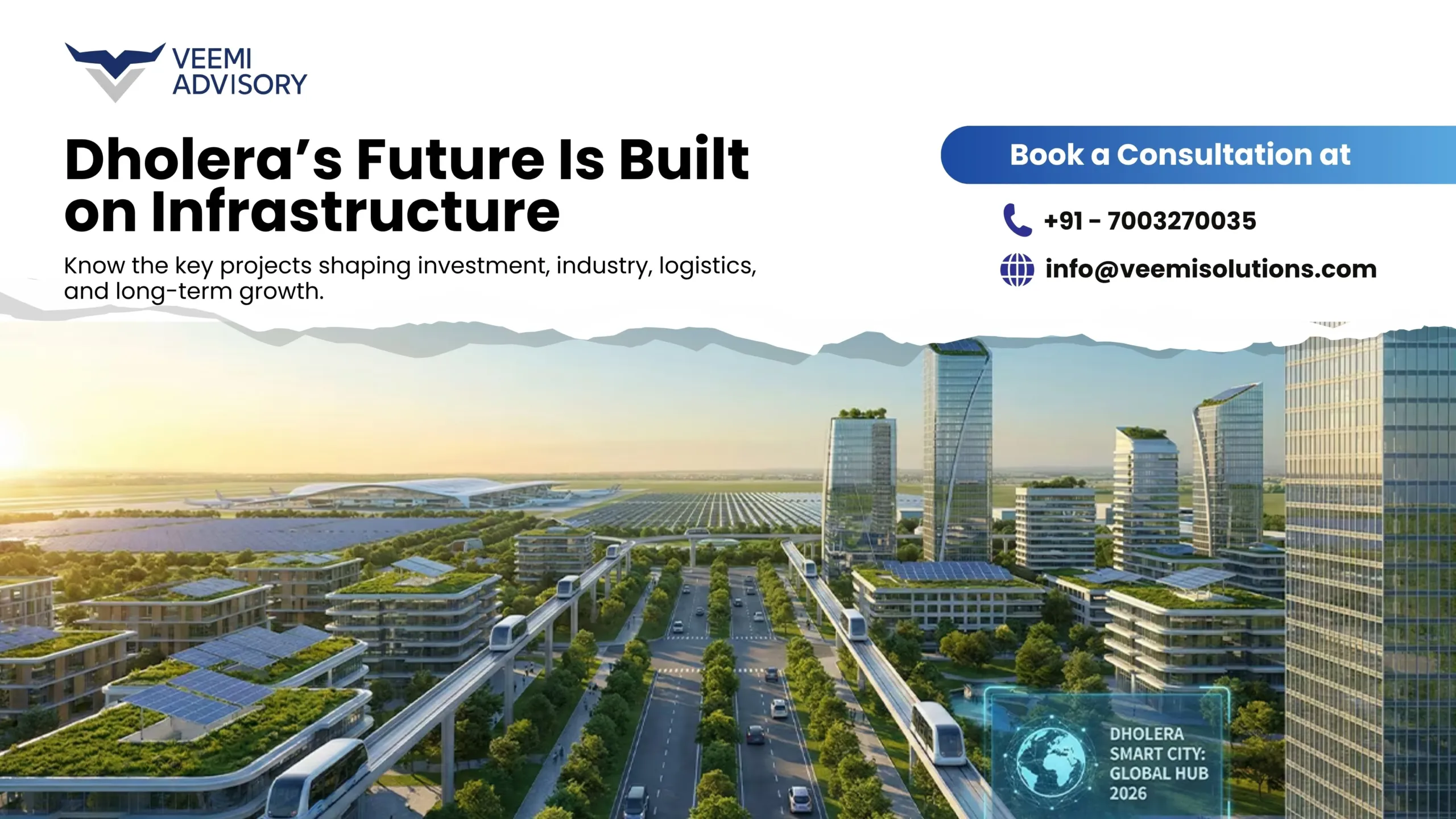
Dholera is becoming one of India’s most closely watched greenfield investment destinations. For investors, the real opportunity is not only in land appreciation. It lies in how major Dholera infrastructure projects connect industry, logistics, utilities, clean energy, aviation, and advanced manufacturing into one planned economic zone.
Dholera Special Investment Region, or Dholera SIR, covers about 920 sq. km, with the Activation Area of 22.54 sq. km developed under approved town planning schemes.
This makes Dholera different from speculative urban expansion because core planning, trunk infrastructure, and industrial zoning are central to its growth model.
7 Dholera Infrastructure Projects Investors Should Watch
Dholera’s growth is not dependent on a single project. A network of infrastructure, mobility, utilities, energy, logistics, and industrial developments will shape its future economy.
Here are the key Dholera infrastructure projects investors should track closely.
Infrastructure Project | Why It Matters | Investor Opportunity |
Activation Area | Core urban and industrial foundation | Industrial land, utilities, commercial growth |
Ahmedabad–Dholera Expressway | Faster regional connectivity | Logistics, warehousing, real estate |
Dholera International Airport | Cargo and passenger movement | Hospitality, aviation, cargo, business parks |
Freight and Rail Connectivity | Lower logistics cost | Industrial supply chains and freight hubs |
Water and Utility Systems | Supports large-scale industries | Manufacturing, semiconductors, housing |
Renewable Energy Infrastructure | Clean and reliable power | ESG-led industries, data centres, manufacturing |
Semiconductor Ecosystem | High-value industrial growth | Ancillary units, housing, services, logistics |
1. Activation Area and Trunk Infrastructure
The Activation Area is the starting point of Dholera’s planned development. It includes the basic systems required for industrial and urban growth.
Key infrastructure includes:
- Internal road networks
- Utility corridors
- Water supply systems
- Power distribution
- ICT and smart city systems
- Sewage and effluent treatment
- Natural gas infrastructure
Why investors should care:
- Reduces early-stage development risk
- Supports plug-and-play industrial growth
- Improves confidence for manufacturers
- Creates demand for commercial and residential projects
Investor takeaway:
Focus on locations close to completed or progressing trunk infrastructure rather than relying solely on future master-plan promises.
2. Ahmedabad–Dholera Expressway
The Ahmedabad-Dholera expressway is one of the most important connectivity-led infrastructure projects in Dholera. It improves movement between Ahmedabad, Dholera, industrial zones, and future logistics corridors.
Expected impact:
- Faster travel between Ahmedabad and Dholera
- Better access for investors, workers, and suppliers
- Improved road freight movement
- Stronger demand near interchanges and access points
Best-suited investment areas:
- Logistics parks
- Warehousing zones
- Commercial land near access roads
- Workforce housing projects
- Industrial plots with strong road connectivity
Investor takeaway:
Do not judge a location only by distance. Check its actual access to expressway entry points, service roads, and industrial corridors.
3. Dholera International Airport
Dholera International Airport can become a major growth driver for the region. Its role extends beyond passenger travel to cargo, aviation services, warehousing, and business movement.
Potential economic benefits:
- Cargo handling
- Business travel
- Airport-linked logistics
- Hospitality demand
- Aviation support services
- Warehousing and distribution activity
Industries that may benefit:
- Electronics
- Semiconductors
- E-commerce logistics
- Export manufacturing
- High-value cargo businesses
- Hospitality and commercial services
Investor takeaway:
Airport-linked opportunities can be attractive, but investors should track commissioning timelines, cargo facilities, road access, and zoning rules before paying premium prices.
4. Freight, Rail, and Logistics Connectivity
Strong freight and rail connectivity can make Dholera more competitive for manufacturing and export-oriented industries. Logistics efficiency will help attract companies that need cost-effective goods movement.
Why this matters for Dholera’s economy:
- Reduces transport costs
- Improves supply chains
- Supports large-scale manufacturing
- Connects Dholera with wider trade routes
- Strengthens warehousing demand
Potential investment themes:
Segment | Opportunity |
Warehousing | Storage and distribution demand |
Industrial land | Supplier and manufacturing units |
Logistics parks | Freight handling and movement |
Transport services | Fleet, cargo, and last-mile support |
Commercial spaces | Offices for logistics and industrial firms |
Investor takeaway:
Before investing in logistics-focused land, verify road access, rail alignment, cargo movement plans, and actual industrial demand.
5. Water, Wastewater, and Industrial Utility Systems
Industrial growth depends on reliable utilities. For Dholera, essential systems include water supply, wastewater treatment, drainage, power, gas, and ICT systems to attract serious industries.
Critical utility systems include:
- Bulk water supply
- Industrial water pipelines
- Wastewater treatment
- Effluent treatment
- Power supply
- Gas network
- ICT infrastructure
Why this matters for investors:
- Manufacturing units need stable utilities
- Semiconductor and electronics industries require reliable water and power
- Housing and commercial projects need long-term service capacity
- Poor utility access can delay execution
Investor takeaway:
Always verify current utility access, not just future availability. Cheap land may become costly if basic infrastructure is delayed.
6. Renewable Energy and Clean Power Infrastructure
Clean power can help Dholera attract modern industries that value sustainability, energy efficiency, and ESG compliance.
Possible growth drivers:
- Solar energy potential
- Clean power access
- Industrial energy planning
- ESG-focused manufacturing
- Data centre demand
- Green supply chain needs
Industries that may prefer clean power locations:
- Data centres
- Electronics manufacturing
- Solar component manufacturing
- Green industrial units
- Export-focused businesses
- Advanced manufacturing companies
Investor takeaway:
For energy-sensitive investments, check power reliability, tariff structure, renewable procurement options, and backup systems before making a decision.
7. Semiconductor and Advanced Manufacturing Infrastructure
The semiconductor ecosystem can become one of Dholera’s biggest long-term economic drivers. It can create demand beyond one factory or industrial unit.
Likely demand around semiconductor growth:
- Supplier units
- Precision engineering services
- Cleanroom support services
- Worker housing
- Logistics and warehousing
- Commercial offices
- Facility management
- Technical training centres
Why this is important for investors:
- High-value industries create support ecosystems
- Skilled workforce demand can support housing and retail
- Ancillary units may need nearby industrial spaces
- Logistics and utilities can increase the surrounding land value
Investor takeaway:
Do not focus only on the headline semiconductor project. Study the wider ecosystem, including suppliers, workforce, housing, logistics, and commercial services.
Key Challenges Investors Should Not Ignore
Dholera has strong long-term potential, but investors must remain disciplined. Large infrastructure-led regions develop in phases. Some projects may be operational, others under construction, and others still in planning or approval stages.
Key risks include unclear land titles, weak access roads, delayed utility connections, overpricing, lack of nearby social infrastructure, and speculation-driven selling. Investors should also examine whether a location serves industrial, residential, or logistics demand, or only future expectations.
The safest approach is to separate verified infrastructure from promotional claims.
Practical Checklist Before Investing in Dholera
Before investing in Dholera real estate, industrial land, warehousing, or commercial property, check:
- Current project status: operational, testing, under construction, or planned
- Land title, zoning, NA status, and development permissions
- Distance from expressway, airport, trunk roads, and industrial zones
- Utility access for water, power, drainage, ICT, gas, and wastewater
- Demand drivers such as manufacturing, logistics, semiconductors, housing, and services
- Government notifications, budget allocations, and confirmed project updates
- Realistic holding period and exit strategy
Dholera’s Growth Outlook for Investors
Dholera’s growth will depend on how well its infrastructure, connectivity, utilities, airport, logistics, and industrial ecosystem come together. For investors, the best opportunities will come from verified project progress, strong location fundamentals, and real demand, not speculation.
To plan with clarity, book a consultation to discover how our solutions can help.
FAQs
They improve connectivity, utility access, industrial readiness, and long-term business potential, making Dholera more attractive for planned investment.
The Ahmedabad–Dholera Expressway, Dholera International Airport, and semiconductor ecosystem can have a major combined impact on logistics, industry, and real estate demand.
Dholera may offer long-term potential, but investors should check project status, land title, zoning, utility access, and actual infrastructure progress before investing.
Dholera International Airport can support cargo movement, business travel, warehousing, hospitality, aviation services, and industrial growth.