How Early Investors Benefit in Greenfield Smart Cities
Greenfield smart cities are emerging as one of the most strategic investment opportunities for long-term investors. These cities are built from the ground up with planned infrastructure, smart mobility, digital systems, sustainable utilities, residential zones, commercial hubs, and economic corridors.
For investors, the biggest advantage is timing.
Early investment in smart cities allows investors to enter before the location becomes fully developed, prices mature, and demand peaks. This early positioning can create strong long-term value when supported by proper due diligence and realistic holding expectations.
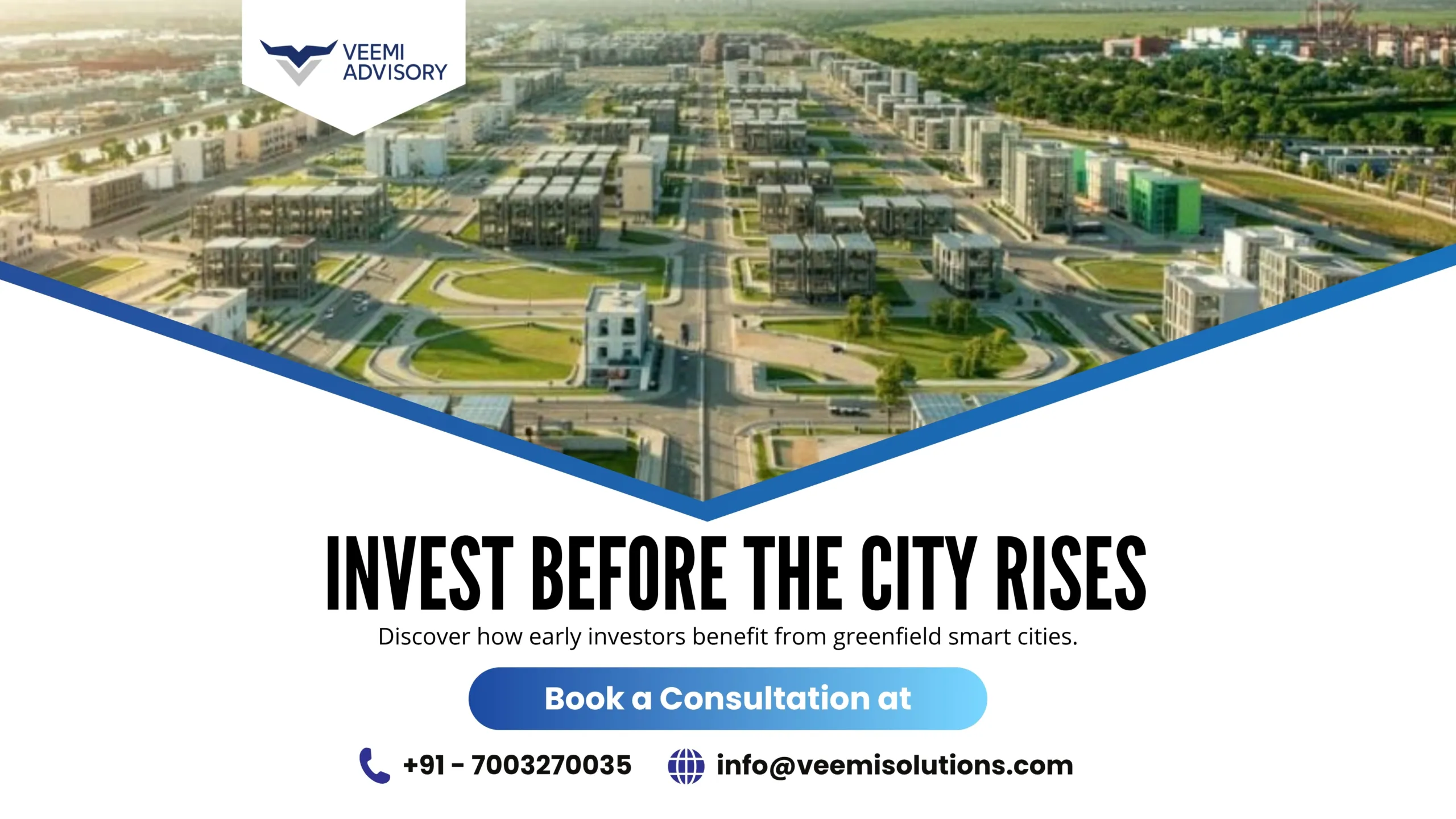
In India, Dholera Special Investment Region in Gujarat is one of the most prominent examples of a greenfield smart city. It is planned as a greenfield industrial smart city located around 100 km southwest of Ahmedabad.
What Are Greenfield Smart Cities?
A greenfield smart city is a new urban development created on undeveloped or underdeveloped land. Unlike existing cities, these projects are planned with future growth in mind.
They usually include:
- Smart roads and transport systems
- Integrated residential and commercial zones
- Digital infrastructure and IoT-enabled services
- Sustainable water, power, and waste systems
- Industrial, logistics, or business districts
- Schools, hospitals, retail, and lifestyle amenities
For investors, this creates an opportunity to participate in a city’s growth journey from an early stage. Dholera fits this model because it is being developed as a planned greenfield industrial smart city with world-class infrastructure and a long-term economic growth vision.
Why Early Investment in Smart Cities Matters
In mature city locations, most of the value has already been priced in. Infrastructure is established, demand is visible, and property prices are often high.
Greenfield smart cities work differently.
Early investors may enter before:
- Major infrastructure is completed
- Large-scale population migration begins
- Commercial activity becomes active
- Rental demand strengthens
- Land and property values fully appreciate
For investors exploring early investment in smart cities, Dholera stands out for its infrastructure-led growth, industrial potential, connectivity, and long-term urban expansion.
Key Benefits for Early Investors
1. Lower Entry Price
One of the strongest benefits of early entry is pricing.
At the initial stage, investors may find better valuations in:
- Land parcels
- Residential properties
- Commercial spaces
- Industrial plots
- Mixed-use developments
As infrastructure improves and demand increases, these assets may appreciate over time.
2. Infrastructure-Led Appreciation
Smart city growth is closely connected to infrastructure delivery.
When roads, airports, metro links, utilities, schools, hospitals, and business hubs become operational, investor confidence usually increases. This can directly influence land and property values.
The value journey often moves through three stages:
- Planning stage: lower pricing, higher uncertainty
- Development stage: visible infrastructure progress
- Occupancy stage: stronger demand, better liquidity, and higher valuations
Early investors benefit most when they enter before the market fully recognises this growth curve.
3. First-Mover Advantage
Early investors often get access to better locations within the master plan.
These may include assets near:
- Main roads
- Transit corridors
- Commercial districts
- Educational institutions
- Healthcare zones
- Industrial or logistics hubs
This first-mover advantage can help investors secure stronger positioning before wider demand enters the market.
Investment Opportunities in Greenfield Smart Cities
Investment Segment | Potential Benefit | Best Suited For |
Land and plotted development | Long-term appreciation | Patient investors and HNIs |
Residential property | Future housing demand and rental potential | Individual investors and NRIs |
Commercial real estate | Office, retail, and business demand | Institutional and income-focused investors |
Industrial and logistics assets | Growth from highways, airports, and trade corridors | Businesses and infrastructure investors |
Digital and utility infrastructure | Smart grids, data systems, EV charging, and sustainability assets | Funds and strategic investors |
Why These Cities Can Create Long-Term Value
Greenfield smart cities are not just real estate projects. They are planned economic ecosystems.
Their long-term value can come from:
- Job creation
- Better connectivity
- Business migration
- Industrial development
- Digital infrastructure
- Improved quality of life
- Sustainable urban planning
When these factors come together, they can create demand across housing, commercial, retail, logistics, and infrastructure assets.
Current Industry Challenges Investors Should Consider
While the opportunity is strong, investors must not ignore the risks.
Long Development Timelines
Smart cities take years to mature. Investors should not expect immediate returns.
Early investment works best when the investor has:
- A long-term horizon
- Patience for infrastructure completion
- Realistic return expectations
- Ability to hold through slow market phases
Execution Risk
Even promising projects can face delays.
Common reasons include:
- Approval issues
- Funding delays
- Land acquisition challenges
- Policy changes
- Slow infrastructure execution
- Weak coordination between agencies
Before investing, it is important to check whether the project has visible progress and credible stakeholders.
Demand Uncertainty
A smart city becomes valuable only when people and businesses actually move there.
Investors should ask:
- Are there employment hubs nearby?
- Is the city connected to major economic centres?
- Are schools, hospitals, and retail spaces planned?
- Are businesses or institutions already showing interest?
- Is there a clear reason for people to live or work there?
Without real demand drivers, appreciation may remain slow.
Due Diligence Checklist Before Investing
Before making an early investment in smart cities, investors should review the following points carefully:
- Master plan and development phases
- Government approvals and policy support
- Developer or authority track record
- Land title clarity
- Zoning permissions
- Road, airport, metro, or highway connectivity
- Utility readiness, including power, water, drainage, and internet
- Presence of business, industrial, or employment anchors
- Social infrastructure, such as schools and hospitals
- Expected rental demand
- Exit options and resale liquidity
A good investment decision should be based on facts, not only future promises.
How Investors Can Reduce Risk
Early investment can be rewarding, but it should be planned carefully.
Investors can reduce risk by following these steps:
Invest in Phases
Avoid putting all capital into one asset at the announcement stage. Start with limited exposure and increase investment as infrastructure milestones become visible.
Choose Infrastructure-Linked Locations
Prefer locations near:
- Highways
- Airports
- Metro routes
- Business districts
- Industrial corridors
- Logistics zones
These areas usually have stronger long-term demand potential.
Verify the Developer or Authority
Check whether the project is backed by credible developers, government agencies, institutional investors, or experienced infrastructure partners.
Balance Appreciation and Cash Flow
A strong portfolio may include both:
- Long-term appreciation assets, such as land
- Income-generating assets, such as rental commercial or residential properties
This helps reduce dependence on future price growth alone.
Turning Early Entry into Long-Term Value
Early investment in smart cities can offer strong long-term value through lower entry prices, infrastructure-led appreciation, and first-mover advantage. However, investors should evaluate approvals, connectivity, demand drivers, and development timelines before investing.
With the right due diligence, greenfield smart cities can become strategic wealth-creation opportunities.
Book a consultation to discover how our solutions at Veemi Solutions can help you evaluate early investment opportunities in Dholera Greenfield Smart City with greater clarity and confidence
FAQs
It refers to industrial locations where core systems such as roads, power, water, drainage, and connectivity are already planned or operational, enabling faster business setup.
They are planned from the ground up with modern infrastructure, improved connectivity, commercial zones, and sustainable urban systems that can support long-term value appreciation.
Yes, it can involve risks such as project delays, slow demand growth, approval issues, and long holding periods. Proper due diligence is essential.
It is suitable for long-term investors, HNIs, NRIs, family offices, infrastructure funds, and businesses looking for future growth locations.
Investors should check approvals, land titles, infrastructure timelines, developer credibility, connectivity, and real demand drivers before investing.