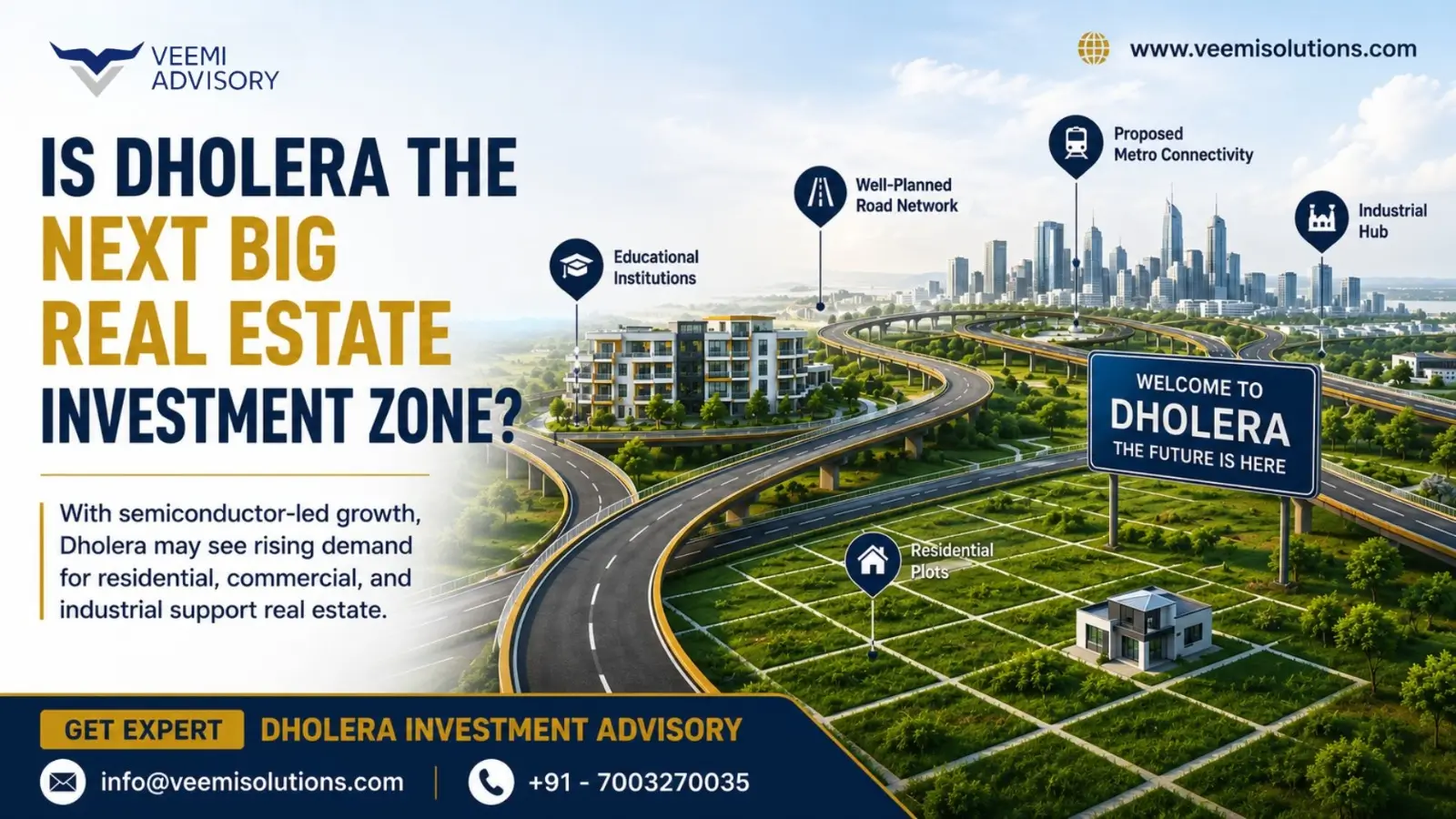
How Dholera’s Semiconductor Ecosystem Can Impact Real Estate Demand
Dholera is shifting from a smart city vision to an industry-led investment destination. Its growing semiconductor ecosystem can drive demand for housing, commercial spaces, logistics, hospitality, and industrial support real estate.
For investors, the opportunity is promising, but careful evaluation is essential. Legal checks, location analysis, infrastructure review, and professional Dholera investment advisory should guide every decision.
Quick Answer
Dholera’s semiconductor ecosystem can increase real estate demand by attracting skilled employees, suppliers, contractors, consultants, logistics companies, and support businesses. This can create demand for residential plots, rental housing, commercial spaces, warehousing, serviced apartments, and industrial support land.
However, investors should avoid speculative buying and focus on verified assets, strong connectivity, clear titles, and realistic holding periods.
Why the Semiconductor Ecosystem Matters for Dholera
A semiconductor ecosystem is not a single factory-led development. It is a chain of industries, services, and infrastructure requirements.
Key Real Estate Impact Areas
- Workforce housing
- Rental apartments
- Commercial shops and offices
- Warehousing and logistics
- Industrial support land
- Hospitality and serviced accommodation
- Healthcare, education, and daily-use services
When a high-value manufacturing ecosystem grows, real estate demand usually follows in stages. First comes construction activity. Then comes operational employment. Over time, vendors, suppliers, and service providers begin to enter the market.
For Dholera, this can support long-term property demand if industrial execution and infrastructure development continue at a steady pace.
How Semiconductor Growth Can Create Residential Demand
Residential real estate may be one of the first segments to feel the impact of semiconductor-led development.
A semiconductor ecosystem needs engineers, technicians, plant operators, managers, vendors, contractors, and administrative teams. These groups require different types of housing.
Possible Housing Demand
- Rental homes for technical staff
- Apartments for mid-level professionals
- Serviced residences for consultants and visiting teams
- Staff accommodation for contractors
- Long-term residential plots for investors and end users
Investors should not look only at low land prices. They should study livability. A property with better road access, utility planning, nearby social infrastructure, and proximity to employment zones may perform better than a cheaper but isolated asset. Read this interesting blog around Dholera Land Price 2026.
Commercial Real Estate Opportunities
As population density increases, commercial demand can rise gradually. Employees and businesses need daily services. This may create opportunities for small and medium commercial spaces.
Commercial Uses That May Gain Demand
- Grocery stores
- Food outlets
- Pharmacies
- Clinics
- Banks and financial services
- Training centres
- Co-working spaces
- Repair and maintenance services
- Business support offices
Commercial property in Dholera should be evaluated based on future footfall. Road visibility, parking, nearby residential clusters, and tenant demand are important.
A commercial plot or shop may not generate returns immediately. Investors need to assess whether the surrounding area has the potential to become an active business location.
Warehousing and Industrial Support Demand
Semiconductor manufacturing depends on a reliable supply chain. Equipment, components, cleanroom materials, packaging support, and technical services may need nearby facilities.
This can create demand for warehousing and industrial support real estate.
Important Factors for Industrial Real Estate
- Approved land use
- Road width and truck access
- Power and water availability
- Distance from industrial zones
- Drainage and logistics movement
- Compliance with development rules
Industrial and warehousing land can be attractive, but only when it is legally usable and operationally practical. Wrong zoning or poor access can reduce long-term value.
Real Estate Segments That May Benefit
Real Estate Segment | Demand Driver | Investor Suitability |
Residential plots | Long-term urban and workforce growth | Long-term investors |
Rental housing | Engineers, staff, vendors, contractors | Yield-focused investors |
Commercial spaces | Retail, services, offices, food outlets | Investors studying footfall |
Warehousing | Supply chain and vendor movement | Industrial investors |
Serviced apartments | Consultants, expats, project teams | Hospitality-focused investors |
Industrial support land | Ancillary and technical services | Experienced investors |
This table shows that Dholera investment is not limited to land banking. Different asset classes may perform differently depending on location, timing, demand, and infrastructure maturity.
Current Industry Challenges Investors Should Consider
Dholera’s growth story is strong, but investors should remain practical. Early-stage markets can carry higher risk.
1. Infrastructure Timing Risk
Roads, utilities, drainage, transport, and social infrastructure may develop in phases. If an investor enters too early in a weak location, capital may remain locked for years.
2. Liquidity Risk
Real estate may show appreciation on paper, but resale demand can be limited in developing markets. Investors should understand who the future buyer or tenant will be.
3. Speculative Pricing
Semiconductor-related news may increase property prices quickly. Investors should avoid overpaying based only on promotional claims.
4. Legal and Title Risk
Title clarity, zoning, encumbrance checks, approvals, and land-use permissions are essential before purchase.
5. Demand Mismatch
Not every property near Dholera will benefit equally. Demand may concentrate around specific zones, roads, employment clusters, and planned urban areas.
Due Diligence Checklist Before Investing
Before making a decision, investors should review both legal and market factors.
Legal Checks
- Clear title history
- Encumbrance certificate
- Sale deed verification
- Approved layout plan
- NA permission, where applicable
- RERA registration, where applicable
- Zoning and land-use confirmation
Location Checks
- Distance from Dholera SIR
- Access to main roads and expressways
- Future connectivity plans
- Availability of utilities
- Drainage and ground-level condition
- Nearby residential, commercial, or industrial zones
Market Checks
- Comparable property prices
- Actual transaction values
- Developer credibility
- Rental demand indicators
- Exit options
- Holding period requirement
This is where professional Dholera investment advisory becomes important. A structured advisory process can help investors avoid emotional decisions and compare opportunities objectively.
Investment Strategy for Different Investor Profiles
Conservative Investors
Conservative investors should focus on legally clear assets with better connectivity and visible infrastructure progress. They should avoid remote or unclear land parcels.
Long-Term Investors
Investors with a 7 to 10-year view may consider residential plots or strategic land parcels, provided documentation and zoning are verified.
Rental-Yield Investors
Rental-focused investors should wait for clear workforce housing demand. Rental yield depends on actual occupancy, not future projections.
Commercial Investors
Commercial investors should study footfall, nearby employment clusters, road visibility, and future business activity before investing.
NRI Investors
NRI investors should avoid remote purchases based only on brochures or verbal commitments. Independent legal verification and professional advice are strongly recommended.
Role of Dholera Investment Advisory
The semiconductor ecosystem can make Dholera more attractive, but it also makes investment decisions more complex. Investors must understand infrastructure timelines, legal documents, project credibility, zoning, location relevance, and resale potential.
A professional Dholera investment advisory service can help with:
- Property shortlisting
- Risk assessment
- Legal document review
- Location comparison
- Market pricing analysis
- Investment suitability
- Exit strategy planning
Good advice should not simply promote a property. It should help investors protect capital and identify real demand-backed opportunities.
Red Flags to Avoid
Investors should be careful if they notice:
- Guaranteed return claims
- Pressure-based booking offers
- Missing title documents
- No clear access road
- Unverified “near semiconductor plant” claims
- Very low prices without explanation
- No zoning clarity
- No realistic resale plan
A disciplined investor should verify first and invest later.
ALSO READ: Dholera vs GIFT City: Which Investment Opportunity Fits Your Goal?
Conclusion
Dholera’s semiconductor ecosystem can become a major driver of real estate demand. It may support residential housing, rental accommodation, commercial services, logistics, warehousing, hospitality, and industrial support land.
However, the strongest opportunities will likely come from assets connected to real infrastructure, employment, accessibility, and legal clarity. Investors should avoid speculation and focus on verified, demand-backed decisions.
For investors exploring Dholera opportunities, professional Dholera investment advisory can help reduce risk and improve decision-making.
Book a consultation to discover how our solutions can help you make informed Dholera real estate investment decisions!
FAQs
It can increase demand for housing, commercial spaces, warehousing, logistics facilities, and support services as skilled workers, vendors, and businesses enter the region.
Dholera may suit long-term investors who are comfortable with phased infrastructure growth and who choose legally verified, well-connected properties.
Residential plots, rental housing, commercial spaces, serviced apartments, warehousing, and industrial support land may benefit from semiconductor-led growth.
Dholera investment advisory helps investors assess legal documents, location quality, infrastructure progress, pricing, risk, and exit potential before investing.
Investors should check title clarity, zoning, approvals, access roads, utility availability, developer credibility, market pricing, and resale potential.