How Dholera is Different from Traditional Industrial Estates in India?
If you’ve ever visited a traditional industrial estate in India, you’ll notice something instantly familiar: factories, narrow roads, heavy trucks, and a constant “why is there so much traffic?” vibe. These places get the job done, but they’re rarely planned like a modern city.
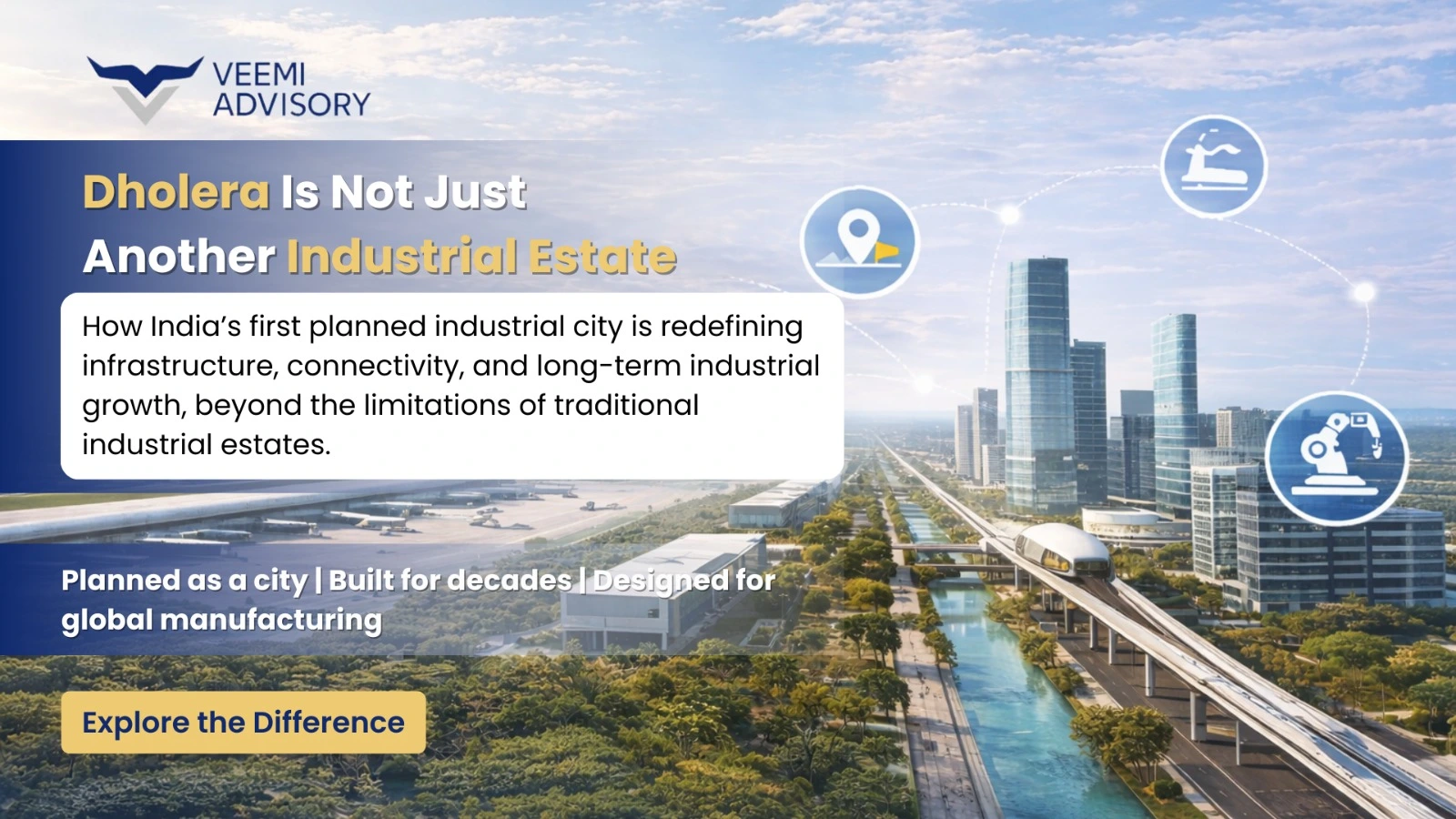
Now imagine an industrial area that isn’t just a cluster of factories, but a full-fledged planned city with clean roads, smart utilities, residential areas, and future-ready infrastructure. That’s Dholera SIR, and it’s not just “another industrial park.” It’s a whole new way of building industrial cities.
Let’s break down exactly how Dholera is different from the traditional industrial estates you know.
A Fundamental Shift in Development Approach
Traditional industrial estates are typically created to address immediate industrial demand. The primary objective is to make land available quickly so that factories can begin operations. Infrastructure improvements often follow in response to congestion, utility shortages, or logistical bottlenecks.
Dholera follows a fundamentally different approach. Development is guided by long-term industrial capacity rather than short-term activation. The region is designed to accommodate future growth in manufacturing, logistics, and urban demand without requiring continuous retrofitting. This forward-looking model reduces structural stress as activity increases.
6 Key Differences Between Dholera and Traditional Industrial Estates in India
Here are six key differences why Dholera stands apart from traditional industrial estates in India.
1. Planned as a City, Not Just an Industrial Zone
Most traditional industrial estates focus only on allocating land for factories. Residential areas, social infrastructure, and commercial facilities develop separately, often without coordination.
Dholera is designed as a complete city, where industries, housing, offices, and public spaces are planned together.
2. Long-Term Planning Instead of Reactive Development
Traditional industrial estates are often developed to meet immediate demand. Infrastructure upgrades are introduced only when problems arise. Dholera follows a long-term vision, designed to support decades of industrial and urban growth.
3. Smart Infrastructure Built Before Industries Arrive
In traditional industrial estates, infrastructure often struggles to keep pace with industrial activity. Power shortages, water supply issues, and inadequate drainage are common challenges. Dholera reverses this approach by building core infrastructure first. Reliable power systems, planned water management, and modern drainage networks are established before industries begin operations, reducing operational risks.
4. Smart Technology Integrated into Daily Operations
Traditional industrial estates rely heavily on manual systems for managing utilities and traffic. Dholera incorporates smart technology into its core framework. Digital monitoring of power, water, and waste systems improves efficiency, reduces downtime, and allows faster response to issues, making industrial operations more reliable and cost-effective.
5. Strong Logistics and Global Connectivity
Connectivity limitations often restrict the efficiency of traditional industrial estates. Dholera is strategically located within the Delhi-Mumbai Industrial Corridor, giving it access to major highways, rail networks, ports, and Dholera airport. This multi-modal transport planning reduces logistics costs and supports export-oriented industries.
6. Sustainability Embedded in the Master Plan
Environmental planning in traditional industrial estates is usually reactive, addressing pollution and resource shortages after they occur. Dholera integrates sustainability into its master plan from the start. Renewable energy use, water recycling, rainwater harvesting, and climate-resilient urban design ensure that industrial growth remains environmentally responsible and sustainable over the long term.
The Future of Dholera Industrial Investment
Traditional industrial estates often face challenges like power shortages, traffic congestion, and limited space for expansion. These issues increase operational costs and reduce productivity, especially as industries grow.
Looking ahead, Dholera’s future as an industrial investment destination is strong due to its strategic location and planned growth. Being part of the Delhi–Mumbai Industrial Corridor positions it as a key manufacturing and logistics hub.
Conclusion: From Industrial Estate to Industrial City
Dholera is not simply an upgrade of the traditional industrial estate model, it is a complete transformation. While conventional estates focus on providing space for factories, Dholera focuses on creating a future-ready industrial city.
With planned infrastructure, smart technology, sustainability, and global connectivity, Dholera represents how industrial development in India is evolving from reactive growth to proactive planning.
Whether it is industrial land, strategic investment opportunities, or long-term planning support, Veemi RE Advisory helps clients make informed decisions aligned with Dholera’s future vision.
FAQs
Dholera is planned as a complete smart city rather than a standalone industrial zone. Unlike traditional industrial estates, it integrates industrial development with residential areas, smart infrastructure, sustainability measures, and global connectivity from the start.
No. Dholera is designed to support a wide range of businesses, including manufacturing units, logistics companies, MSMEs, and future-oriented industries. The availability of planned plots and scalable infrastructure makes it suitable for both large and mid-sized enterprises.
Yes. Dholera is a large, planned region with multiple zones, development phases, and regulations. Professional advisory helps investors and businesses understand the right locations, timelines, and compliance requirements.